
series - Middle est - iran - interstate conflicts
Analysis Note #1 - The Importance of the Strait of Hormuz: Historical Reminder and Current Stakes
Alican TAYLA (Director of the LEGEM) - March 18, 2026
Since the outbreak of the war against Iran on 28 February 2026, triggered by coordinated strikes by Israel and the United States, the conflict has spread across much of the Middle East, with Iranian retaliations and Israeli military operations in Lebanon. We offer a series of analytical notes to shed light on this new escalation, put these developments in context, and understand what they reveal about our times and about contemporary international relations.
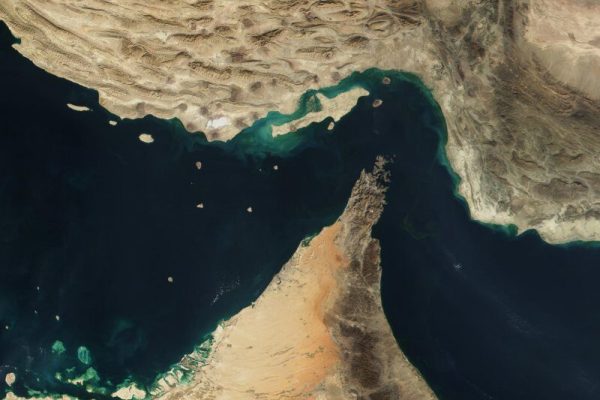
The Strait of Hormuz
Between 20 and 30 percent of the world’s crude oil transported by sea passes through this strait, as does one-fifth of global trade in liquefied natural gas (LNG). In addition to Iran, all the coastal nations—including Saudi Arabia, the United Arab Emirates, and Qatar—are heavily dependent on it for their energy exports, as well as for their imports, particularly food.
While it may seem surprising that Donald Trump and his inner circle did not anticipate Tehran closing the Strait of Hormuz, there are two possible explanations for this. On the one hand, simply because it had never happened before, despite Tehran’s systematic threats to do so, including during previous major crises involving Iran, such as the Iran-Iraq War (1980–1988), the 2019 crisis, or the 12-day war against Israel in June 2025. On the other hand, it was widely acknowledged that a prolonged closure of the strait would have such severe consequences for Iran itself—90% of whose crude oil passes through Hormuz—that such a decision seemed self-destructive… unless Tehran believed its vital interests were under threat1.
The scale of the attacks coordinated by the United States and Israel has clearly convinced the Iranian regime that this was the case. At the same time, this demonstrates that Washington has underestimated Iran’s capacity to inflict damage in this asymmetric war. All the more so because the willingness to block the strait and accept the consequences is the only fundamental condition for implementing this strategy, since, in military practice, it is not that difficult to achieve. Indeed, drones, underwater mines, and various inexpensive explosives have been sufficient for Iran to block virtually all passage since the beginning of March. However, several countries, such as India—which has been severely affected by the blockade of traffic in the Strait of Hormuz—are currently negotiating with Tehran to obtain transit permits2. This gives the Iranian regime considerable diplomatic leverage.
Following the forced withdrawal of his aircraft carrier, the USS Abraham Lincoln, the U.S. president had attempted to rally his European NATO partners, as well as China, to launch a joint operation to secure the Strait of Hormuz. His appeal was quickly rejected, including by some of his most enthusiastic allies since the start of the war, such as Germany3.
Some observers argue that the United States is indirectly seeking to exploit the situation to weaken China, the main importer of Iranian oil, a significant portion of whose LNG imports comes from Qatar via the Strait of Hormuz. However, this view should be put into perspective because, despite the significance of the figures, China reportedly holds the world’s largest strategic oil reserves, even surpassing those of the United States4. Furthermore, unlike other Asian countries such as Japan and South Korea—major allies of Washington—China has alternative supply routes, notably from Russia via oil and gas pipelines connecting the two countries. These would not replace massive imports from the Middle East but would clearly soften the short-term shock, while bringing Beijing closer to Moscow economically, which would clearly contradict U.S. strategy.
BIBLIOGRAPHY
1 For more details, take a look at: BURDY Jean-Paul, interview, « Le détroit d’Ormuz, verrou stratégique du golfe Persique », Questions internationales, n° 99-100, April 2019, pp. 167-173.
https://shs.cairn.info/magazine-questions-internationales-2019-4-page-167?lang=fr