Analysis Note #2 - What does international law say about the war in Iran ? What the crisis reveals about the state of multilateralism
Alican TAYLA (Director of the LEGEM)
March 20th, 2026
Since the outbreak of the war against Iran on 28 February 2026, triggered by coordinated strikes by Israel and the United States, the conflict has spread across much of the Middle East, with Iranian retaliations and Israeli military operations in Lebanon. We offer a series of analytical notes to shed light on this new escalation, put these developments in context, and understand what they reveal about our times and about contemporary international relations.
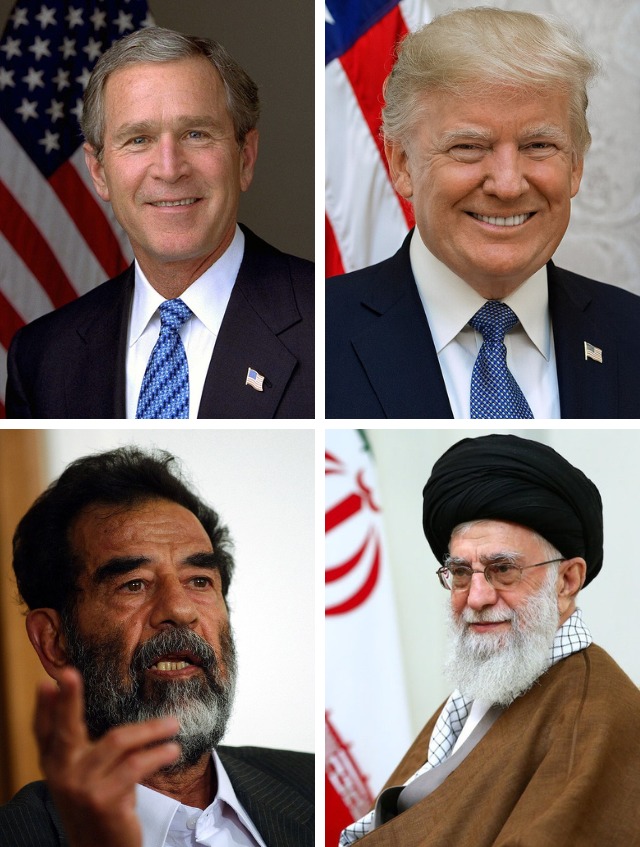
Two days after the start of the Israeli–American strikes, at a press briefing, US Secretary of State Marco Rubio justified his country’s intervention in Iran in the following terms: We knew that there was going to be an Israeli action, we knew that that would precipitate an attack against American forces, and we knew that if we didn’t preemptively go after them before they launched those attacks, we would suffer higher casualties…¹”. In doing so, he identified an “imminent threat” and invoked “preventive war” as the basis for his administration’s intervention.
This terminology brings to mind the context of the early 2000s and the wars waged in Afghanistan and Iraq under US leadership in the aftermath of the terrorist attacks of 11 September 2001. At the time, these interventions had already fuelled major debates and genuine concerns about the erosion—if not the end—of international law. For while the intervention in Afghanistan complied with international norms—despite a somewhat expanded reading of the concept of self-defence, extended to attacks carried out by terrorist organisations and not only by states—the 2003 invasion of Iraq ignored them entirely.
By way of reminder, in 1945, the United Nations Charter established, for the first time in history, the prohibition on the use of force as a fundamental principle of international law (Art. 2(4)). The only exceptions, which are tightly circumscribed, are set out in Chapter VII: prior authorisation by the Security Council in cases of a threat to the peace, breach of the peace, or act of aggression, or self-defence (Art. 51)². Even then, the George W. Bush administration introduced the notion of preventive war and relied heavily, in justifying it, on the alleged weapons of mass destruction said to be held by Saddam Hussein’s regime³. In the face of opposition from many countries—most notably the French government’s clear position that it would use its veto in the event of a vote in the Security Council—the United States bypassed the Council and invaded Iraq without UN approval or mandate.
Furthermore, the consequences of these two operations have been catastrophic. In Afghanistan, the Taliban returned to power shortly after the withdrawal of US troops, following two decades of chaotic military presence⁴. In Iraq, the upheavals triggered by the intervention continue to impact the entire region.
That being said, from a legal standpoint, a distinction must be drawn between the legitimacy and the legality of actions. The former will always—and should always—be a subject of debate. However, no state can claim, on its own, to possess a superior moral authority to decide on the legitimacy of actions, particularly when it comes to the use of force. This is why the latter—the legal framework within which all states are supposed to be equal—should prevail, despite the imperfections of the international system and its difficulty in asserting itself against the most powerful⁵. When a state proceeds to kidnap the elected leader of another sovereign country without any legal basis, political considerations regarding the latter’s domestic actions cannot constitute legal arguments, any more than potential controversies surrounding their election. Similarly, accusing a government of authoritarianism and repression against its own population does not provide a legal basis for armed intervention aimed at regime change, even when the accusation is entirely well-founded.
This is not a reflection of cynicism or resignation with regard to the spirit of the international norms as they were conceived in the aftermath of the Second World War. On the contrary, it serves as a reminder of their original ambition. The United Nations Charter provides for a wide range of alternatives to the use of force (mediation, inquiry, peaceful settlement, sanctions, etc.), always within a multilateral framework. Their effectiveness is, rightly, regularly called into question. Nevertheless, unilateral military interventions justified on purported humanitarian or democratic grounds, or in the name of other noble values, have in practice most often produced entirely counterproductive outcomes. In this instance, the justifications put forward by the United States did not constitute any legal basis for the war in Iraq in 2003, nor do they constitute one today for the war against Iran.
However, we observe a notable difference between these two periods. In 2003, the United States’ violation of international law triggered widespread reactions worldwide. The European Union was divided into two blocs: on one side, the countries aligned with the US position (the United Kingdom, Spain, Italy, Poland, Denmark, the Netherlands, Hungary, Portugal and the Czech Republic); on the other, those firmly opposed to the war, led by Germany and France. The European Parliament unequivocally condemned the unilateral and unlawful action represented by the preventive war launched by the United States⁶. In addition, massive demonstrations took place in most capitals, notably in London and Madrid, where strong popular opposition to the war contributed to electoral setbacks for governing parties in the subsequent elections⁷. Twenty years later, despite the striking similarities in both facts and context, the absence of official or public reactions is an alarming sign of the blatant normalisation of violations of international law by Western governments, and of a form of resignation among populations which, according to all polls, remain strongly opposed to the war in Iran⁸.

This normalisation is perhaps the most fundamental—and most troubling—revelation of all: that a new rule now governs international relations, namely the law of the strongest. Have we definitively entered a system—or a non-system—in which the leaders of the major powers reject multilateralism, refuse to be constrained by norms before which all states are meant to be equal, and conduct their foreign policy through bilateral relations based on pressure, threat and coercion? In such a context, beyond the moral or legal dimension, a major political problem arises, particularly for European governments, and it can be formulated in very simple terms: if you do not denounce this law of the strongest when it is practised by your allies, you will have no credibility in condemning it when it is practised by your adversaries—and, in the process, you will have stripped international law and the principle of multilateralism of their substance.
It is, moreover, this vision and this method that bring leaders such as Donald Trump and Vladimir Putin closer together rather than dividing them. In reality, this is part of a broader trend that extends beyond international relations alone. Indeed, there is a growing propensity towards authoritarian practices in the domestic politics of an increasing number of countries, including some Western states long regarded as benchmarks of democracy and the rule of law. The temptation to view pluralism and respect for institutions as obstacles to the exercise of power—won at the ballot box, yet exercised and consolidated in an increasingly authoritarian manner—the criminalisation of political oppositions deemed radical, as well as pressure exerted on the media, are no longer the preserve of states commonly—often rightly—described as authoritarian regimes⁹.
The conflict against Iran is therefore unfolding in such a context, alongside the economic dealings between D. Trump and V. Putin over the Russo‑Ukrainian conflict¹⁰, Israel’s repeated violations of the ceasefire in Gaza¹¹, and China’s military and diplomatic pressure on Taiwan¹². These are all signs that remind us of the central importance of strengthening international law and the principle of multilateralism.
Furthermore, it must not be forgotten that international law does not only operate in matters of war and peace. It is also, and above all, the general legal framework governing climate and environmental protection, forced migration and cross-border displacement, the protection of populations in disaster situations, the right to survival and material dignity, and the protection of minority groups. That it is far from perfect—and at times ineffective, particularly when it comes to maintaining peace in the face of failings by powerful states—is beyond doubt. Its consolidation should inevitably be accompanied by a profound reflection on its necessary transformation and adaptation to the contemporary era, which is fundamentally different from the post-Second World War circumstances in which the UN and its Charter were born. This effort raises complex but essential questions, starting with the permanent member status and the accompanying right of veto, granted to the five victors of the war within the Security Council.
In the meantime, however, the imperfections of international law should not lead to its abandonment, for what would be the alternative? The German legal scholar Kai Ambos summarises it as follows: “Like all sources of law, international law is also, above all, a matter of limiting power. Without international law, the new absolute monarchs of the 21st century will act without rules or law. This will benefit no one¹³.”
BIBLIOGRAPHY
2 https://www.un.org/fr/about-us/un-charter/chapter-7
3 For further details on the Iraq War and its legal justifications, see, for example, CARLIER Michel, Irak, le mensonge : une guerre préventive contestée, Harmattan, Paris, 2007, 290 p.
4 PAKZAD Karim (interview), « Le retrait d’Afghanistan : vingt ans de guerre pour rien ? », IRIS, 12 juillet 2021.
https://www.iris-france.org/159073-le-retrait-dafghanistan-vingt-ans-de-guerre-pour-rien/
5 To explore this legal issue in greater depth, see the excellent analysis by the legal scholar Marcelo Kohen, a specialist in international conflicts, based on the case study of the US intervention in Iraq: KOHEN Marcelo, « Recours à la force et valeurs universelles », in (dir.) DELCOURT Barbara, DUEZ Denis, REMACLE Éric, La guerre d’Irak, prélude d’un nouvel ordre international ?, Peter Lang Publishing, Bruxelles, 2004, 259 p., pp. 63-76.
6 https://reliefweb.int/report/iraq/europe-and-war-iraq-draft-resolution
7 In Spain, José María Aznar’s Popular Party was voted out of office in 2004. In the United Kingdom, Tony Blair’s Labour Party did remain in power in 2005, but it nonetheless lost 60 seats despite clear popularity on domestic issues.
8 By way of example, in France, between 60% and 70% of respondents say they disapprove of the Israeli–American actions in Iran, according to an IPSOS survey:
9 https://www.v-dem.net/documents/60/V-dem-dr__2025_lowres.pdf
13 https://taz.de/Rechtsprofessor-Kai-Ambos-ueber-Irankrieg/!6159419/