Analysis Note #3 - What role are the Kurds of Iran playing in the ongoing conflict?

Since the outbreak of the war against Iran on February 28, 2026, triggered by coordinated strikes by Israel and the United States, the conflict has spread across much of the Middle East amid Iranian retaliatory strikes and Israeli operations in Lebanon. We offer a series of analytical insights to help make sense of this new flare-up, place these developments in context, and understand what they reveal about our era and contemporary international relations.

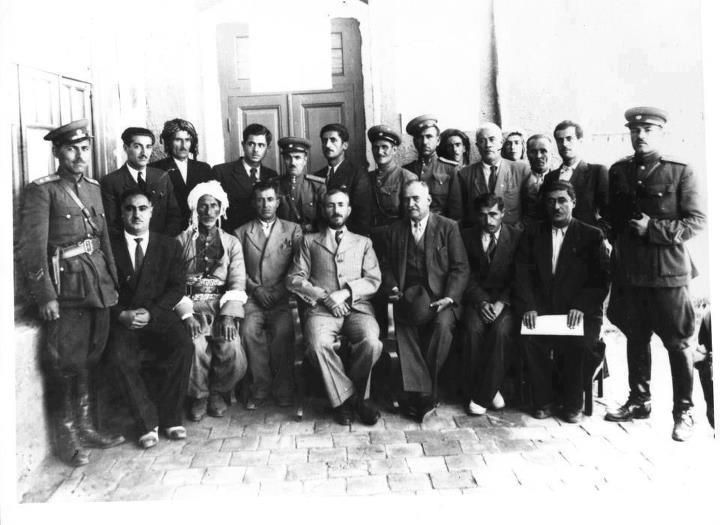
Mustafa Barzani in Mahabad Kurdish Republic

While Washington has repeatedly shown itself to be very reluctant to send ground troops to the conflict and the prospect of a popular uprising against the Iranian regime seems to be fading, a third option has reportedly been considered by the U.S. administration, as reported by numerous American media outlets: support for the Kurds of Iran.¹

It may seem surprising that this group is primarily mentioned, as it is not the only ethnic minority in the country. Iran is in fact composed of a great ethnolinguistic diversity, where Persians account for only 45% to 60% of the total population, and among this multitude of groups, the Kurds are not the most numerous. The Azeris, a Turkic-speaking population, for example, are demographically twice as numerous as the Kurds.

However, the Kurds appear to be the group most organized around their national demands, which have taken shape through a highly militarized opposition to the Iranian central government.

Indeed, it is important to remember that the Kurds are not found only in Iran but are also spread across Turkey, Syria, and Iraq. The transnational territory where these Kurdish populations live is commonly referred to as Kurdistan, literally “the land of the Kurds.” Starting in the second half of the 20th century, Kurdish nationalist ideology began to spread widely throughout Kurdish society—or rather, societies. However, after World War II, this national movement developed primarily within the specific social and political contexts of each of these states, following trajectories that were sometimes very distinct.

In this case, Iranian Kurdistan held a special place because the Kurdish nationalist movement developed there relatively early. One of the defining episodes of this development was the Kurdish Republic of Mahabad. This was an independent Kurdish political entity under Soviet protection, which lasted for just under a year between 1945 and 1946, before its territory was retaken by the military forces of the Iranian state.³

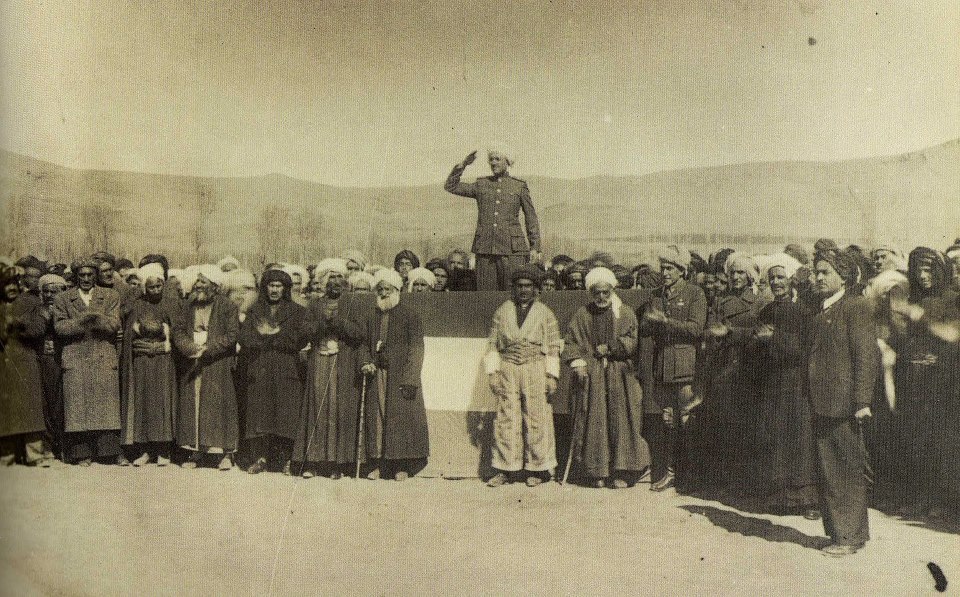
Kurdish Mahabad Republic Was Established in 1947 - The President Ghazi Muhammad In The Middle

Although short-lived, this political experiment had a lasting influence on the Kurdish nationalist movement. Its president, Qazi Muhammad, who was executed by the Iranian regime after the fall of the republic, remained a nationalist icon beyond Iran’s borders. The Democratic Party of Iranian Kurdistan (PDKI), the first true Kurdish nationalist political party—which remains active today—was founded during this period. This party survived the fall of the republic and subsequently restructured itself alongside other Kurdish political organizations such as Komala (a Marxist party).

These Kurdish political groups subsequently participated in the 1979 Iranian Revolution alongside a number of other Iranian organizations—not only Islamist ones—while advancing demands related to the Kurdish national movement.

However, they were very quickly and brutally suppressed by the fledgling Islamic Republic of Iran, particularly in the context of the Iran-Iraq War between 1980 and 1988. A conflict during which the Iranian Kurds were supported, armed, and funded by Saddam Hussein’s Iraqi regime, while the Iraqi Kurds were armed and funded by the Islamic Republic of Iran.4

As the main losers of the resolution of this conflict, these parties subsequently went into exile, mainly in Europe, where the Iranian regime’s repression continued to target them, notably through the assassination of their key political leaders. This was particularly the case for Abdul Rahman Ghassemlou, then secretary-general of the PDKI, who was assassinated in Vienna in 1989.

Subsequently, these Iranian Kurdish political parties settled in the autonomous Kurdish region of Iraq established in 1991. There, however, they suffer from a general weakening and numerous internal divisions that have led to several splits. Nevertheless, in this region they enjoy relatively limited protection from Iraqi Kurdish political parties. During this period, non-Iranian Kurdish political parties—which were far more influential—developed strategies for transnational expansion by creating new Iranian Kurdish parties, but under their supervision and influence. This is the case, for example, with the PKK (Kurdistan Workers’ Party), which established the PJAK (Party for a Free Life in Kurdistan) in 2004. The reality is that today the Iranian Kurdish national movement remains very weak and extremely fragmented.

A few months before the start of the current conflict, however, these parties collectively agreed to form an alliance: “the Alliance of Political Parties of Iranian Kurdistan.” It is therefore also these political groups that were reportedly approached by the U.S. administration to intervene in the current conflict with Iran. Initially, some of these parties showed signs of agreeing to this U.S. proposal. There were even a few staged crossings of the Iranian border covered by international journalists.⁶

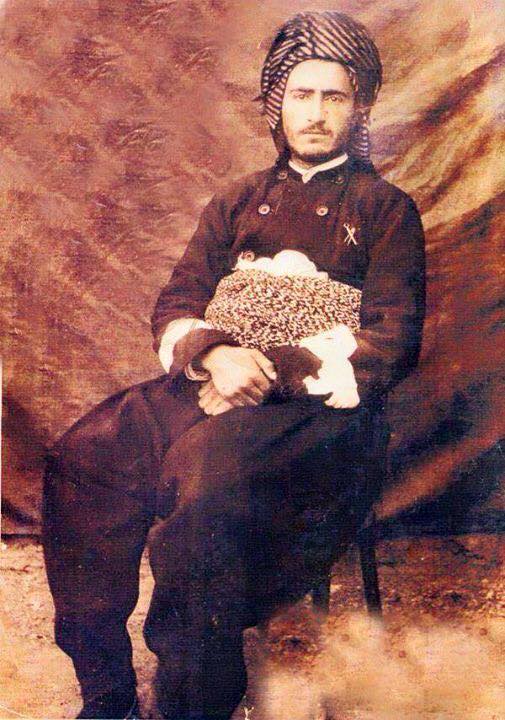
Qazi Muhammed wearing Kurdish clothes

However, subsequently—even though the situation remains highly fluid on a day-to-day basis—these various political groups, through the new alliance they have formed, have spoken out against the U.S. proposal for large-scale military action on Iranian soil.⁷

There are several reasons for this refusal:

  1. The first is a lack of trust in the United States, given the history of broken promises of support to Kurdish nationalist political parties in Syria and Iraq. Recently, during Damascus’s military recapture of northeastern Syria from the predominantly Kurdish forces of the Autonomous Administration of Northeastern Syria, Washington—the main ally of the Syrian Kurds—distinguished itself by its non-interventionism, both military and diplomatic.⁸

  2. The second reason is simply the weakness of these parties—the causes of which we explained earlier—which have at most only a few thousand fighters (at the high end).

  3. Finally, the Islamic Republic reportedly also promised these political groups the possibility of greater autonomy for Iranian Kurdish territories following the conflict if they did not side with the United States.9 Although Iranian Kurdish political forces harbor no illusions given their history with the Iranian regime, this proposal may have played a role in internal discussions regarding a possible intervention.

However, despite their lack of direct involvement in the conflict, Iranian Kurdish parties have been the target of numerous Iranian strikes on their facilities in Iraq.

BIBLIOGRAPHY

1 BERTRAND, Natasha, “CIA working to arm Kurdish forces to spark uprising in Iran, sources say,” CNN, March 3, 2026.

https://edition.cnn.com/2026/03/03/politics/cia-arming-kurds-iran

2 BROMBERGER Christian, “The Center and the Ethnic Periphery in Iran,” Appartenances & Altérités, No. 7, 2025, published online November 1, 2025.

http://journals.openedition.org/alterites/1720 ; DOI: https://doi.org/10.4000/156lo

3 EAGLETON JR. William, The Kurdish Republic of 1946, Oxford, Oxford University Press, 1963.

4 RAZOUX Pierre, The Iran-Iraq War 1980–1988, Paris, Perrin, 2017.

5 Études kurdes, No. HS V, Abdul Rahman Ghassemlou, Paris, Institut kurde de Paris, 2020.

6 “Iranian Border: The Kurds Are Preparing,” TF1 Info, March 10, 2026.

https://www.tf1info.fr/international/videos/video-frontiere-iranienne-les-kurdes-se-preparent-85018-2429373.html

7 GOLI Ammar, “Why Kurdish parties have not entered Iran’s war,” The Amargi, March 19, 2026.

https://theamargi.com/posts/why-kurdish-parties-have-not-entered-irans-war

8 QEREMAN Orhan, “Syria’s Kurds caution Iran’s Kurds against aligning with the US against Tehran,” Reuters, March 8, 2026.


LEGEM

Contact : legem.labo@gmail.com

Français  |  English

Auteur/autrice

Scroll to Top