
A Fifty-Year "Imminent Threat": Iran's Nuclear Program and the Evolution of Western Perceptions
Alican TAYLA
May 17, 2026
In June 2025, the Twelve-Day War had, according to Washington and Tel Aviv, largely destroyed Iran’s nuclear capabilities. Less than a year later, on February 28, 2026, the United States and Israel launched massive airstrikes and targeted assassinations against Iran in a “preventive war,” with the stated aim of preventing Tehran from developing a nuclear bomb.
Initiated with U.S. cooperation in the 1950s, Iran’s nuclear program has, since the Islamic Revolution—and especially since the early 2000s—become one of the most complex and sensitive issues in global geopolitics. At the heart of the enduring hostility between the United States and Israel on one side and Iran on the other, the Iranian nuclear program has been the subject of a full-scale propaganda battle. Tehran has consistently maintained that its program is purely civilian. Yet the ambiguity surrounding its uranium enrichment levels, its periodic reluctance to cooperate with the IAEA (International Atomic Energy Agency), which is responsible for monitoring compliance with the Nuclear Non-Proliferation Treaty, and evidence of a past military nuclear program prior to 2002 all undermine the credibility of this claim in the eyes of Western countries.
On the other hand, exaggerated and alarmist interpretations of the facts by the United States and Israel—often contradicting IAEA reports—as well as sweeping economic sanctions that weigh heavily on the entire Iranian population, reinforce perceptions of double standards and paradoxically contribute to the persistence of a repressive regime.
To better understand the situation, it is essential to revisit the history of Iran’s nuclear program, which has always been deeply intertwined with the country’s political upheavals. Such an analysis reveals that Western perceptions of the program, as well as its political instrumentalization, have evolved in parallel, shaped by the shifting strategic interests between Washington and Tehran. In a Middle East once again plunged into deadly turmoil since the attacks of October 7, 2023, and the multiple wars waged by Israel, what is the true state of Iran’s nuclear ambitions today?
Barış Göktürk, "Fires Riot - 28", 2020.
“Our objective was the destruction of Iran’s nuclear enrichment capacity and a stop to the nuclear threat posed by the world’s number one state sponsor of terror. Tonight, I can report to the world that the strikes were a spectacular military success. Iran’s key nuclear enrichment facilities have been completely and totally obliterated.[1],” declared U.S. President Donald Trump in a national address on June 21, 2025, during the Twelve-Day War pitting Israel and the United States against Iran.
“In a bold and necessary exercise of American strength, President Donald J. Trump authorized Operation Epic Fury — a precise, overwhelming military campaign to eliminate the imminent nuclear threat posed by the Iranian regime…[2],” stated an official White House press release on March 1, 2026, announcing the outbreak of the new war against Iran.
Only eight months separate these two statements, yet they are fundamentally at odds regarding the imminence of a “nuclear threat” in the hands of the Iranian regime. What is the reality on the ground? To understand the potential threat of a nuclear-armed Iran, one must first clearly trace the history of the Iranian nuclear program, its evolution, and above all, how its perception by the West—and the United States in particular—has shifted over time.
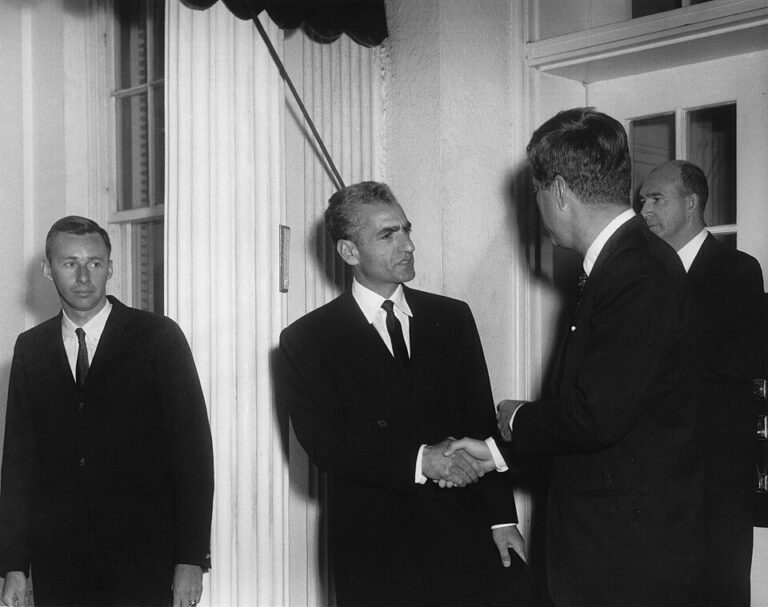
Shah Mohammad Reza Pahlavi with President John F. Kennedy in 1962.
The Origins of Iran’s Nuclear Program: U.S. Cooperation in the Cold War Context
The origins of Iran’s U.S.-backed nuclear program date back to the 1950s. In 1957, in particular, the two countries signed a cooperation agreement under the “Atoms for Peace” program. Geopolitically, the context was far from insignificant. A few years earlier, Operation Ajax—organized by the CIA and Britain’s MI6 against the democratically elected government of Mohammad Mossadegh—had major and long-lasting consequences[3]. The coup against the prime minister, who had nationalized the Anglo-Iranian Oil Company to the great dismay of the British, proved successful. In August 1953, Mossadegh was replaced by General Fazlollah Zahedi, chosen by the two Western allies.
The authority of Shah Mohammad Reza Pahlavi was strengthened, notably through reliance on SAVAK (the National Intelligence and Security Organization), which, with support from the CIA and Mossad, carried out extremely harsh repression against all opposition groups, particularly the communists of the Tudeh Party[4]. Iranian oil was removed from exclusive British control and opened to other Western investors, including the United States, whose role in the sector would steadily grow over the following years. Above all, however, the country became a key anti-communist bastion, playing a strategic role as a bulwark against Soviet influence in the Middle East.
Iranian-American nuclear cooperation was therefore a direct product of the Cold War context. Driven by this momentum—which gradually came to include several European countries, particularly Germany and France—Iran’s nuclear program expanded at a breathtaking pace. Founded in 1959, the Tehran Nuclear Research Center (TNRC) was equipped with a nuclear reactor supplied by the United States. It became operational in 1967 and used highly enriched uranium.
In the 1970s, Shah Mohammad Reza Pahlavi announced an ambitious expansion plan envisioning as many as twenty nuclear power plants in the long term. In 1974, the Atomic Energy Organization of Iran (AEOI) was established to oversee this vast program. That same year, the West German company Kraftwerk Union began construction of the Bushehr nuclear power plant. It would ultimately be completed by Russia’s Federal Atomic Energy Agency (Rosatom) and commissioned in the 2010s. To this day, it remains the country’s only operational nuclear power plant generating electricity, though at very low efficiency—supplying roughly 1% of Iran’s electricity needs. However, in March 2025, Tehran signed a $25 billion agreement with Moscow for the construction of four additional nuclear power plants in southern Iran[5]. Since the 1993 civilian nuclear cooperation agreement between the two countries, Russia has replaced Western nations as the principal supporter of Iran’s nuclear program.
The 1979 Revolution: When the “Project” Became a “Threat”
This new partnership was the result of a profound geopolitical rupture following the 1979 Revolution that overthrew the Shah, who had been criticized by all opposition movements for his excessive closeness to the United States and Israel, in addition to the suffocating repression and lavish lifestyle displayed by the royal family.
Initially driven by a wide range of political and ideological currents—from communists to ultraconservatives, including nationalists—the revolution ultimately gave rise to the Islamic Republic, which quickly sidelined all other groups by appropriating the repressive apparatus of the fallen monarchy for itself.
The regime change permanently reversed the dynamics of relations with the West, beginning with the United States. In the midst of the revolutionary period, the 1979 hostage crisis at the U.S. Embassy in Tehran marked the rupture of diplomatic relations between the two countries and the beginning of Washington’s sanctions against the new Iranian regime—sanctions that persist to this day.
The vast nuclear projects launched by the Shah were halted, particularly during the war with Iraq from 1980 to 1988, which left the country isolated, cut off from the Western world, and severely weakened economically. Iran’s nuclear program was therefore revived with Russian assistance, as Moscow quickly moved closer to the new regime, which was strongly opposed to U.S. interests in the region.
Thus, when the resumption of Iran’s nuclear program was uncovered by Western countries in 2002, its perception was entirely different: initially supported by the United States and European countries, Iran’s nuclear program was now viewed and portrayed as a major threat in the Middle East. In the aftermath of the September 11, 2001 attacks and the “war on terror” led by the neoconservative administration in Washington, George W. Bush even declared that Iran—despite having no apparent links to al-Qaeda—was part of an “axis of evil,” alongside Iraq and North Korea[6].
“It is due to the direction of Iranian foreign policy since 1979 […] and the hostile relationships that the new regime developed with European states during the Iran–Iraq War, during which France, in particular, supported Saddam Hussein’s regime. It is therefore primarily the foreign policy orientation of the Islamic Republic since 1979 that has transformed its nuclear activities into a geopolitical threat from a Western perspective[7].”
In the early 2000s, while other countries such as the Netherlands, South Africa, Japan, and Brazil also possessed enrichment facilities, “in the Iranian case, we witnessed a major alarmist campaign initiated by Israel, asserting the urgency of military intervention against Iranian installations. This campaign, echoed by neoconservative circles in the West—particularly in the United States and France, where it took on a caricatural form—aimed to demonstrate the imminence of Iran’s acquisition and even potential use of a nuclear bomb[8].”
This shift in perception, along with attempts—particularly by the United States and Israel—to compel Iran to abandon any nuclear ambitions, lies largely at the root of the persistent tensions that have endured for more than four decades.
It is important to note, however, that during this period, perceptions also evolved from Iran’s perspective. In the aftermath of the Iran–Iraq War, as the country became increasingly isolated and faced hostility from its former partners, nuclear development emerged as a central issue tied to the nation’s very independence. Indeed, “nuclear energy was no longer merely an energy project. It gradually became a tool of independence, security […] and negotiation. By advancing or slowing its program, Iran could exert pressure in international discussions. Nuclear development was no longer just a technical matter, but a political instrument. At the same time, it took on a symbolic dimension. For the Iranian leadership, it represented both technological mastery, national sovereignty, and a form of resistance to external pressure[9].”

Barış Göktürk, "The Field", 2020.
Two decades of sanctions and negotiations
The rhythm of relations between Iran and the United States, of which the nuclear issue is the most highly publicized aspect, has been heavily influenced by the respective leaders of both countries. Although the Supreme Leaders—Ruhollah Khomeini (1979–1989) and his successor Ali Khamenei, who was killed on the first day of the coordinated Israeli–American attacks (February 28, 2026)—unquestionably centralized power, Iranian foreign policy has always reflected, at least in part, the vision of the elected president.
Thus, the rise to power of ultraconservative Mahmoud Ahmadinejad in 2005, with his pronounced anti-Western rhetoric and assertive nuclear policy, immediately reignited tensions and triggered new sanctions. For its part, Tehran maintained that its nuclear program was strictly for civilian purposes, pointed to its collaboration with the West during the Shah’s era, and garnered support from the Non-Aligned Movement, comprising 118 states[10]. Nevertheless, following a report by the International Atomic Energy Agency (IAEA), the UN Security Council adopted Resolution 1747 on March 24, 2007, imposing heavy sanctions on Iran, including an arms import and export embargo and an extension of the existing freeze on Iranian assets[11].
A few years later, the dynamic shifted completely. In the United States, Barack Obama had succeeded the neoconservative George W. Bush (President from 2001 to 2009) and launched his term with a promise to break away from previous American foreign policy. He signaled a return to multilateralism and showed signs of goodwill toward the Arab-Muslim world. Less than five months after taking office, in his famous June 4, 2009 speech at Cairo University, he admitted to his country’s involvement in the 1953 coup against the democratically elected government of Mohammad Mossadegh and recognized Iran’s right to access nuclear energy for peaceful purposes[12].
On the Iranian side, after two terms under Ahmadinejad—whose second term resulted from highly contested elections that sparked large-scale protests, violently repressed—it was the moderate Hassan Rouhani who became President of the Republic on August 3, 2013. Rouhani had strongly opposed his predecessor, criticized the repression of protests, and advocated for a rapprochement with Western countries.
Under the impetus of both leaders, a new phase opened in U.S.–Iran relations, driven by progress on the nuclear issue. Indeed, after complex negotiations, the Vienna Agreement was signed on July 14, 2015. It established the Joint Comprehensive Plan of Action (JCPOA), setting out a roadmap for Iran’s commitments in the short, medium, and long term, extending to 2041.
On January 16, 2016, the IAEA published a report confirming that Iran was complying with its commitments, particularly regarding uranium enrichment thresholds, and the process was fully set in motion. Significant sanctions relief was granted to Iran. This marked a major turning point in one of the key geopolitical issues of the contemporary era.
With the substantial involvement of the three European countries—France, the United Kingdom, and Germany—as well as China and Russia, hope was shared among all parties involved. “For the first time, Rouhani openly expressed his satisfaction, announcing that sanctions against Tehran—financial, banking, transport, and trade—had come to an end. Israel ultimately remained the only state to voice its discontent, with Benjamin Netanyahu asserting that he would not abide by the agreement, as it amounted to a surrender to the ‘axis of evil’[13].”
A shift initiated by Donald Trump, signaling a departure from multilateralism
Consequently, on May 8, 2018, the decision by Donald Trump—recently elected President of the United States—to withdraw his country from the Vienna Accord appeared completely at odds with the renewed positive momentum. While IAEA reports had confirmed Tehran’s compliance with the JCPOA, including as late as November 2018[14], this unilateral decision by Washington was accompanied by the reinstatement of severe sanctions against Iran.
How can such a consequential decision be explained? First, it can be understood through Donald Trump’s populist approach to domestic politics. Throughout his election campaign, he repeatedly and forcefully criticized the record of his predecessor, Barack Obama, whose signature foreign policy achievement had been the Vienna Accord—dismissed by Trump as a “horrible deal”[15]. He thus promised to replace what he called “the worst deal ever negotiated” with a new agreement that would be far more advantageous for the United States by adopting a tougher negotiating stance toward Iran[16].
However, beyond the simple question of distinguishing himself from his predecessor—who maintained relatively favorable approval ratings until the end of his term[17]—this decision was indicative of a particular vision of foreign policy. Indeed, after the neoconservative chaos of the 2000s, Barack Obama’s two terms marked a certain return to multilateralism (albeit a multilateralism dominated by the United States).
With Donald Trump, a new chapter opened—one more uninhibited than the neoconservatism of the George W. Bush era—characterized by a categorical rejection of multilateralism, seen as an unnecessary constraint on the expression of American power, which alone should dictate international affairs.
From this perspective, it is important to avoid the trap of viewing the Trump administration as an anomaly, a temporary and marginal parenthesis, and its actions as mere missteps—the work of a “madman”[18]—that would not reflect American imperialism and would therefore not warrant systemic analysis.
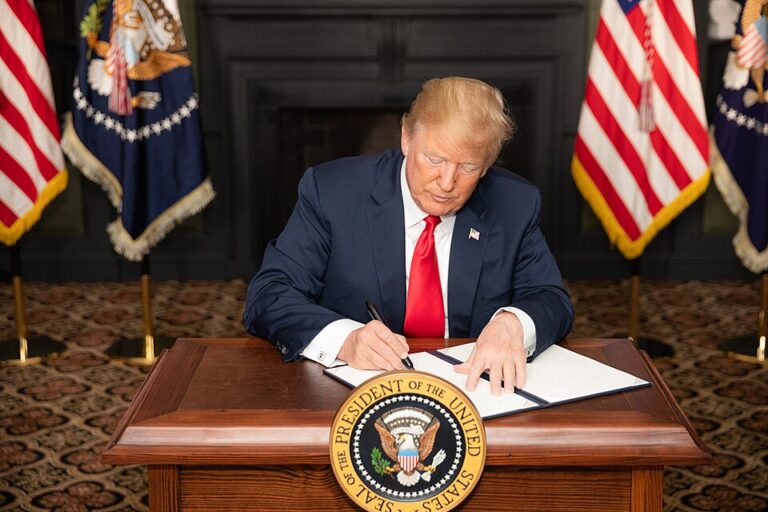
Donald Trump signing the executive order establishing sanctions against Iran, August 5, 2018.
On the contrary, it is essential to fully grasp the nature of this emerging international order, in which authoritarian leaders prefer to engage in opaque bargaining while bypassing collective institutions—illustrated by Donald Trump and Vladimir Putin negotiating an end to the war in Ukraine without Ukraine itself or the European Union. Opposite these partner powers stand the rivals, defined as such by their very nature, regardless of any potential negotiation, and who inevitably become enemies under the pressure of this Manichean worldview, like a self-fulfilling prophecy. This is what China is becoming in the Western collective imagination.
It should be emphasized that this Manichean, civilizational, and conflict-driven vision is not only promoted by the Trump administration in relation to China, but also by the highest levels of the European Union and extends even to Turkey, as illustrated by the controversial remarks made by Ursula von der Leyen on April 20, 2026. Indeed, the President of the European Commission stated that the European Union must “complete the European continent so that it is not influenced by Russia, China, or Turkey,” without providing further details[19].
Finally, all other countries—including European allies—are treated with a degree of disdain. Bilateral relations are favored outside any institutional framework in order to avoid being placed on an equal footing, and depending on circumstances, these countries are subjected to pressure, threats, or even insults from the U.S. president[20]. This configuration is both the symptom and the cause of a growing disconnect between Western states, which remain aligned with Washington’s positions, and countries of the “Global South,” in a context of evident “de-Westernization” of the world. The current crises in the Middle East must be understood within this international landscape. In this context, the total impunity of Israel—and of the United States—reinforces perceptions of double standards, particularly when compared to the sanctions imposed on Russia or Iran, and further deepens the divide between Western countries and the rest of the world.
Returning to the Trump administration’s decision to withdraw from the Vienna Accord, its unilateral and arbitrary nature—along with the arguments put forward—foreshadowed the war to come. In any case, although the JCPOA was theoretically maintained, with European countries (France, Germany, and the United Kingdom) choosing to remain parties to the agreement, it was effectively stripped of any substance and rendered entirely inoperative. This was all the more so given that the U.S. withdrawal was accompanied by the immediate reinstatement of economic and financial sanctions on Iran.
The consequences of such a reversal by Washington were both predictable and disastrous[21]. For Iran, which had until then complied with its commitments, the situation had irreversibly shifted. In response, Tehran gradually freed itself from the constraints of the JCPOA, ceased full and transparent cooperation with the IAEA, and, by accelerating uranium enrichment, significantly expanded its nuclear capabilities. These developments, widely covered in the media, in turn fueled Western concerns about a potential nuclear weapons program and reignited calls—particularly from Israel and segments of the U.S. political class—for military intervention against Iran.
The “Twelve-Day War” mentioned at the beginning of this text took place within this context and ultimately proved to be little more than a prelude to the far broader conflict that would erupt less than a year later.
The Initiation of Conflict in the Midst of Negotiations
Before the outbreak of the conflict, in an attempt at rapprochement between the United States and Iran, both parties were engaged in ongoing negotiations mediated by the Sultanate of Oman. The Omani delegation, along with multiple direct sources, had even reported significant progress[22] on the eve of the war’s outbreak—triggered by Israeli-American bombings of Iran, without any formal declaration.
While Tehran had once again agreed to reduce its level of uranium enrichment and to comply with the JCPOA roadmap, the United States continued to insist on two additional demands. Deemed unacceptable by Iran, these demands stalled the negotiations: the dismantling of Iran’s ballistic missile system (which, as has been evident since February 28, 2026, constitutes the core of the country’s defensive capabilities against external attacks) and the end of its support for all regional political and military organizations forming what is known as the “Axis of Resistance”—in other words, a central pillar of Tehran’s foreign policy[23].
Consequently, the nuclear issue represents only one component of U.S. demands, on which Iran appears clearly cooperative. Yet it is consistently this issue that is highlighted in media coverage and political statements, as it is considered the most effective in mobilizing Western public opinion in favor of the possibility of military intervention in Iran. It would therefore be particularly naïve to assume that the nuclear issue lies at the core of the failure of negotiations, thereby justifying and legitimizing the large-scale bombing of the country.
The same applies to the question of the legitimacy and “effectiveness” of sanctions against Tehran. In practice, since the early 2000s, their primary effect has been to push Iran to pursue its nuclear program more aggressively and to signal the possibility of acquiring a nuclear weapon as an ultimate bargaining lever. Conversely, each period of sanctions relief and U.S. encouragement to return to negotiations has been followed by a phase of constructive cooperation.
The implications of different uranium enrichment levels
When it comes to Iran’s nuclear program, one specific point crystallizes the implications: the level of uranium enrichment. This process, which is necessary to fuel a nuclear power plant, requires an extremely high level for the potential production of an operational atomic bomb.
In 2022, at the height of the crisis that followed the reimposition of sanctions by Donald Trump, the Iranian government publicly announced for the first time that it was enriching uranium to 60%. This threshold is well above the levels set by the JCPOA (3.5%), but also above realistic civilian needs, even the most ambitious ones (around 20%). It therefore represents the crossing of a major threshold on the path toward the possible development of a nuclear weapon, which, in this case, requires weapons-grade uranium enriched to 90%.
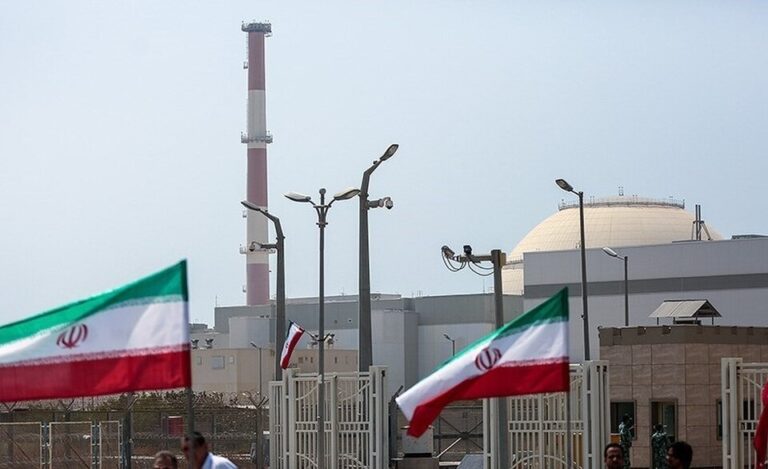
Bushehr Nuclear Power Plant
However, as Héloïse Fayet, a nuclear issues specialist at IFRI, explains, “the time required to go from 60% enrichment to 90% is much shorter than the operation of enriching uranium from 20% to 60%. The more enriched uranium you have, the easier it is to increase the enrichment level[24].”
This could therefore partially justify the perception of an “imminent threat” regarding Tehran’s completion of a nuclear weapon. That said, such a conclusion must be nuanced, as moving from highly enriched uranium to an actual nuclear weapon is far from automatic. For one thing, this critical 90% threshold has not yet been reached, and even if it were, it would not immediately mean that the danger of building an atomic bomb is present. Indeed, “obtaining weapons-grade uranium (90%) is not a sufficient condition to use this weapon immediately. The weaponization of the nuclear payload — that is, mounting it on a missile and delivering it precisely to a target — is a process that can take several years[25].”
In other words, once the uranium is sufficiently enriched, significant technological expertise and considerable resources are still required to manufacture a nuclear weapon, as well as the ability to integrate and use it effectively. This stage remains particularly complex due to chemical, physical, and operational challenges[26].
The inconsistencies in the Western perception of Iran's nuclear program
But there must also, and above all, be the political will and the actual intention to build a nuclear bomb, let alone to use it. Yet, since at least the early 2000s, there has been no tangible sign to this effect from the Iranian side. Indeed, “despite continuous efforts to develop these technologies, we cannot assert that Iran has ever truly wanted to acquire atomic weapons. At the very least, we can simply say that the country wishes to be a ‘threshold state’—meaning very close to the stage of nuclear weapon development, such that it could change its mind at any moment[27].”
On the contrary, Iranian political representatives systematically reiterate Tehran’s official opposition to the possession, and even more so to the use, of nuclear weapons. Historically, this position is a continuation of that of Ruhollah Khomeini in the 1980s. During the Iran-Iraq War, Iraq made massive and documented use of chemical weapons (such as mustard gas, tabun, and sarin), including against its own civilian population, notably against Kurdish populations in Halabja[28]. Despite these public facts, making Iran one of the few countries to have suffered chemical weapons attacks since the First World War, it was Baghdad that Western countries continued to support until the end of the conflict, particularly the United States, but also France, which continued to sell arms to Saddam Hussein’s regime[29]. Although Iran had launched a chemical weapons development program in retaliation, the use of which Ayatollah Khomeini had publicly condemned, Tehran had always refrained from using them[30].
A few years later, a fatwa issued by Ayatollah Khamenei reiterated his predecessor’s position on weapons of mass destruction. Made public in the early 2000s and officially mentioned for the first time in a statement from the Iranian delegation to the IAEA, this fatwa declared that “the production, stockpiling, and use of nuclear weapons are forbidden in Islam, and that the Islamic Republic of Iran should never acquire such weapons[31].”
Khamenei would reiterate this position on numerous occasions, from both religious and ideological standpoints, with different yet always clear formulations. Most of these pronouncements remain public and accessible on his official website. For example, in February 2012, he stated: “Nuclear weapons bring us absolutely no benefit. Moreover, from an Islamic ideological and legal [fiqh] perspective, we consider the development of nuclear weapons to be unlawful. We consider the use of such weapons to be a grave sin[32].” In February 2021, he said: “According to our Islamic thought, any weapon used to kill civilians is forbidden. Whether nuclear or chemical, it is forbidden[33].” Or again, in June 2023: “We do not seek to acquire nuclear weapons. We believe that nuclear weapons are used for mass destruction. We are opposed to mass destruction; it is contrary to Islam. It does not matter whether it involves atomic, chemical, or any other type of weapon[34].”
Iranian officials regularly refer to the fatwa as a religious reference, aligning with the Iranian government’s doctrine that exclusively upholds Iran’s right to develop civilian nuclear power plants to meet the country’s energy needs.
Despite this consistent Iranian discourse on nuclear power, whether in political statements or religious references to Khamenei’s fatwa, these pronouncements are met with equally consistent skepticism from Western countries and Israel. Numerous research and journalistic articles question the fatwa’s validity through ambitious attempts at technical and theological deconstruction in order to discredit it.
Is it a genuine fatwa or simply a doctrine[35]? Did Khamenei truly possess the clerical status to issue one[36]? Can a fatwa not evolve or even be overturned[37]? Does Khamenei condemn, as “haram,” the very production of nuclear weapons or only their use[38]? Might the alleged fatwa not be used for political ends[39]? Who, within Iranian ruling society, would take fatwas seriously, apart from a few religious fanatics[40]? This last argument encapsulates all the contradictions and inconsistencies in the Western perception of the Iranian regime and its portrayal: the regime is dangerous because it is composed of “religious fanatics,” but a pacifist religious doctrine cannot be taken seriously because it would only be respected by “religious fanatics.”
How can we explain this discrepancy between discursive and factual coherence on the one hand (the fatwa has never been refuted and the IAEA has never provided any credible evidence of effective militarization, of a nature to constitute a “threat”, at least since the beginning of the 2000s) and the structural skepticism of Western analysts?
The Legitimacy and Effectiveness of Economic Sanctions Against Iran
The most authoritative and detailed report, representing the international consensus on Iran’s nuclear program, is the one issued by the International Atomic Energy Agency on December 2, 2015, which was produced in part thanks to the Iranian government’s cooperation under the July 2015 agreement[41]. In this report, the IAEA assesses that a nuclear weapons development program existed prior to 2004 and between 2005 and 2009, though it was of an “incomplete and fragmented nature”—in other words, far from the qualitative and quantitative levels necessary to produce an effective nuclear weapon. Since 2009, there has been no credible indication of the continuation of a nuclear weapons program, nor any allocation of nuclear material for military purposes[42].
Despite IAEA reports, since 2010 Iran has been subject to particularly severe financial sanctions, repeated threats of the use of force, industrial sabotage, and targeted assassinations of its scientists[43].
Since the U.S. withdrawal and Tehran’s gradual violations of the terms of the JCPOA, suspicions have resurfaced regarding the resumption of a military nuclear program, based on enrichment levels well above the restrictions set by the 2015 agreement. However, while IAEA figures indicate that Iran has developed a highly advanced enrichment capacity, far exceeding the needs for civilian use, there is no evidence of an active military program, much less an “imminent threat” as claimed by the U.S. and Israeli governments[44].
At the same time, there is good reason to seriously question the concrete consequences of Western sanctions against Iran, particularly regarding their actual effectiveness in achieving the stated objectives. Beyond the moral aspect of economic sanctions, which take the form of collective punishment against Iranian society as a whole, these sanctions have systematically undermined ongoing or potential negotiations, reinforced anti-Western sentiment among the population, and contributed to hardening the repressive regime, which derives additional legitimacy from them[45].
Barış Göktürk, "Fires Riot - 5", 2020.
Of course, this is by no means an attempt to defend nuclear proliferation or to support the idea that Iran should acquire nuclear weapons. Nor is it a matter of intrinsically defending the Iranian government, which represents a fundamentalist regime that is repressive and violent toward its own people, particularly women, LGBTQIA+ individuals, all minorities, and political opponents deemed threats by Tehran.
It must be acknowledged that economic sanctions or military interventions (especially those targeting civilian populations) have, at no point in history—and specifically in Iran’s history since 1979—yielded any benefit for these vulnerable populations, for individual freedoms, or for democracy. The exploitation of these critical issues for the sake of potential joint strategic and political objectives of Washington and Tel Aviv risks having catastrophic consequences for Iranian society and the entire region.
The same applies to the nuclear issue, which is too significant to serve as a justification for a large-scale military intervention across the entire country, in a context where, according to all experts, there was no immediate risk of Iran producing nuclear weapons. This was despite the fact that Tehran was in the midst of negotiations and had agreed to significant concessions regarding its uranium enrichment levels[46].
The Nuclear Non-Proliferation Treaty and its fundamental limitations
A central aspect of the Iranian nuclear issue is legal. As a signatory to the Nuclear Non-Proliferation Treaty since 1968, Iran is obligated under international law not to produce nuclear weapons and to allow the IAEA to verify compliance with this obligation[47].
It is worth recalling that this treaty prohibits the production and possession of any nuclear weapons by all signatory states, except for the five that already possessed them as of January 1, 1968 (the NWS): the United States, China, Russia, France, and the United Kingdom—the five victors of World War II and, above all, the five permanent members of the UN Security Council holding veto power.
Furthermore, although it is much less frequently mentioned, Articles V and VI of the NPT stipulate the inalienable right of all States, in a non-discriminatory manner, to pursue the peaceful uses of nuclear energy[48]. Distinguishing between the intention of peaceful use and the covert intention of military development is the IAEA’s primary and particularly challenging function.
A key component of the contemporary world order, the NPT nevertheless contains significant limitations and sources of inequality, most of which stem from the post-World War II and Cold War context from which it emerged. Its first limitation is that it can only be imposed on States that have agreed to be party to it. This is not the case for Israel, India, and Pakistan, which have never signed the treaty and possess nuclear weapons.
The NPT cannot prevent a signatory state from renouncing it, withdrawing, and subsequently developing nuclear weapons, as was the case with North Korea in 2003. Article X.1 clearly outlines the withdrawal procedure if a signatory state “decides that extraordinary events, in relation to the subject matter of the Treaty, have jeopardized the supreme interests of its country […] with three months’ notice[49].”
It is this possibility, along with the precedent of North Korea, that has worried the most alarmist circles on the Iranian nuclear issue for decades. On the Iranian side, continued participation in the NPT is also not unanimously supported. Indeed, since the assassination of Khamenei by Israeli-American strikes on the first day of the 2026 conflict, voices—albeit a minority—have been raised in the most radical circles of the country calling for the suspension of Iran’s accession to the NPT[50].
The implementation of the Treaty has posed another considerable problem for many decades. While its component aimed at preventing the nuclearization of new states, despite the limitations we have just mentioned, generally functions in practice[51], its other, equally important component, relating to the objective of disarming states that already possessed nuclear weapons at the time of the treaty’s signing, is discussed less and less. Indeed, Article 6 of the NPT states: “Each Party to the Treaty undertakes to pursue in good faith negotiations on effective measures relating to the cessation of the nuclear arms race and to nuclear disarmament, and on a treaty on general and complete disarmament under strict and effective international control[52].” However, the reductions that have taken place since the Cold War are more a matter of quantitative decrease than genuine disarmament. The states in question still maintain massive arsenals while continuing their modernization[53]. Strict and effective international control, on the other hand, proves illusory when it comes to imposing it on the five states that the Treaty authorizes to possess nuclear weapons, which are also the five permanent members of the UN Security Council.
This one-dimensional nature of the NPT is increasingly challenged by the international community. In 2017, after several years of campaigning by numerous NGOs, the Treaty on the Prohibition of Nuclear Weapons (TPNW) was signed. Entering into force in 2021, after being ratified by more than 50 states, the TPNW strengthens Article VI of the NPT with concrete measures and a timetable for complete nuclear disarmament. However, its scope remains largely symbolic because it has not been signed by any nuclear-armed power.
In light of the strict framework of international norms on nuclear disarmament, Iran, a signatory state to the NPT but not possessing nuclear weapons, is attacked by Israel and the United States, two nuclear-armed states. Israel has never signed the NPT, and the United States is the only state to have used nuclear weapons, twice, against another sovereign state.
These imbalances and contradictions in the provisions and application of the NPT reinforce the perception of systemic inequalities inherent in the international order since 1945[54] and, as Karim Haggag, President of the Stockholm International Peace Research Institute (SIPRI), points out, call into question the legitimacy of the NPT[55]. However, the global system established after the Second World War is extremely difficult to change, particularly due to the permanent status of the Security Council, the only international body whose decisions are binding on all states.
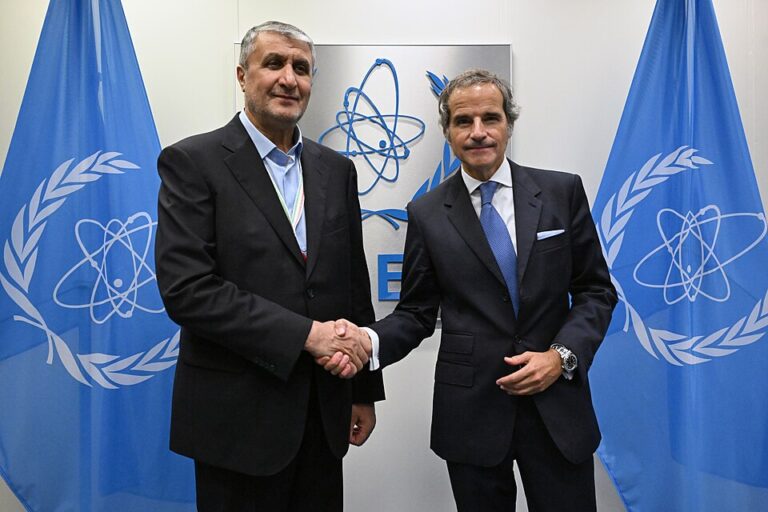
Mohammad Eslami (Vice President of Iran) with Rafael Grossi (Director General of the IAEA) in Vienna on September 16, 2024.
From Obama to Trump, what changes have occurred since 2010?
Israel and a segment of the US political establishment have been calling for armed intervention against Iran for over two decades, with rhetoric emphasizing the need to prevent Tehran from developing nuclear weapons. Yet, until the 2025 Twelve-Day War and the conflict that erupted on February 28, 2026, there had never been a military escalation of such magnitude.
More than once during this period, war seemed almost inevitable. This was notably the case in 2010, at the height of tensions between the United States and Iran following the controversial re-election of Mahmoud Ahmadinejad. Ahmadinejad openly defended the continuation of the civilian nuclear program and expressed his reluctance regarding the IAEA’s extensive monitoring, which he considered discriminatory and excessive[56].
Hillary Clinton, then Secretary of State, called for crippling sanctions and announced that failing that, “all options” would be on the table. Benjamin Netanyahu, already Prime Minister of Israel, threatened preemptive strikes on Iran[57]. Despite historic mediation efforts led by Lula’s Brazil and Erdoğan’s Turkey, which persuaded Tehran to return to peaceful negotiations, the Obama administration refused and decided to implement the heavy sanctions imposed under the Iran Sanctions Act[58].
On the eve of the 2024–2026 conflicts, fifteen years later, the context seems similar. Tensions had been palpable since the United States withdrew from the JCPOA and reinstated sanctions under Donald Trump, as well as with his regular threats of military intervention, threats echoed by Netanyahu, once again Prime Minister.
It is interesting to analyze the factors that prevented the conflagration in 2010 but were no longer present in 2026. First, in 2010, Barack Obama had been in the White House for a year. A proponent of a policy of appeasement toward Arab and Muslim countries, a return to multilateralism after the neoconservative years of George W. Bush, and a significant reduction in US military involvement in the region, he had repeatedly expressed his opposition to military intervention against Iran, to which he offered “a fresh start[59].” Furthermore, the US president not only had the will but also the diplomatic capacity to dissuade Israel from launching a large-scale unilateral action against Iran and to assert himself among the hardliners within his own administration, such as Hillary Clinton.
Furthermore, in the early 2010s, before the start of the major protest movements often referred to as the “Arab Spring,” the geopolitical situation in the Middle East, and particularly that of Iran, was extremely different from the circumstances of 2026. Iran was less weakened economically, diplomatically, and strategically than it is today. It enjoyed the active support of Moscow, which, at the time, was not bogged down in a war it had itself started, thus occupying the bulk of its strategic attention. Similarly, its regional strategic alliances were still in place, albeit somewhat weakened: in Syria, a major strategic ally, Bashar al-Assad was still in power, and Hamas in Gaza and Hezbollah in Lebanon still represented considerable strategic support.
However, on the eve of the massive Israeli-American operations of 2026, the circumstances were entirely different. Returning to the White House after a four-year hiatus, Donald Trump lacked the will or the capacity to restrain Netanyahu. The post-October 7, 2023, Middle East had undergone significant upheaval, all unfavorable to Iran. Hamas and Hezbollah had been virtually neutralized by Israel, which was taking advantage of the complete absence of any concrete or effective response from international institutions and Western countries to act as a hegemonic power in the region.
Furthermore, the fall of Bashar al-Assad’s regime deprived Tehran not only of a strategic ally but also of vital supply routes connecting it to Lebanon. Meanwhile, Russia was preoccupied with the conflict in Ukraine, a conflict whose conclusion had been bogged down for many months. Domestically, Iran is in a catastrophic financial situation, and the almost constant protests are increasingly challenging the regime itself.
It is in this context that Israel launched its Twelve Days War, followed, in the midst of negotiations, by the current conflict triggered by the bombings of February 28, 2026.
It is clear that between 2010 and 2026, the fundamental difference is not so much the Iranian nuclear program, which may have suddenly evolved in a far more alarming direction—despite the increase in uranium enrichment in response to the 2018 sanctions—but rather the geopolitical circumstances, which, from the Israeli and American perspectives, have become favorable to launching large-scale military operations. To this, one should undoubtedly add an underestimation of Iran’s willingness and capacity to retaliate.
Conclusion
In light of all these elements, it becomes quite clear that the Iranian nuclear issue reveals more about the stance of Western countries, starting with the United States, than about Iran and its regime itself. Indeed, Iran’s main peculiarity stems from the fact that the Western perspective—the political, intellectual, and media spheres for the most part—unilaterally and without any real basis attributes to Tehran not so much the capacity to produce nuclear weapons, but rather the intention and potential to use them.
Unlike India, Pakistan, and Israel, which, having never signed the NPT, each possess nuclear weapons today; the United States, the only state to have actually used them—twice—against another sovereign state; and North Korea, a former signatory to the NPT, which withdrew from it in 2003 and subsequently developed its nuclear weapon; Why should only Iran present a truly imminent threat, not of development, but of the use of the nuclear bomb? Is the Iranian regime more autocratic and “irrational” than that of North Korea? Does Pyongyang maintain more cordial and conciliatory relations with Western countries than Tehran?
Could part of the answer lie in a purely realpolitik argument, namely that since North Korea already possesses nuclear weapons, an operation against it would be extremely dangerous because it could potentially provoke a nuclear retaliatory attack? But isn’t that precisely the principle of deterrence, which consists of developing nuclear weapons precisely so as not to have to use them? This rationality, if not this legitimacy, of a desire for protection through deterrence, recognized de facto even in North Korea, but also in Pakistan, India, and Israel, why shouldn’t it be recognized in Iran? On what basis is it accepted as a fact that Iran alone, unlike others, is capable of using the atomic bomb, to such an extent that this justifies decades of sanctions and, since 2025, massive bombings and targeted assassinations? This approach is experienced, even in the most moderate circles of the Iranian intelligentsia, and even within the opposition to the regime, as a “presumption of guilt” with the application of punishment without trial, which strengthens Iranian nationalism that transcends all divisions[60].
Barış Göktürk, "Fires Riot - 2", 2020.
However, at the heart of the perpetual animosity between the United States and Israel toward Iran lies a profound strategic and regional divergence between the two blocs, not a real threat of nuclear attack, much less any democratic concerns regarding Iranian society. With its very strong economic potential stemming from its abundant oil and natural gas resources, its close ties to Russia, and its involvement in several politico-military movements in neighboring countries, Iran had, over the decades, established a veritable “axis of resistance,” fundamentally opposed to Israel and to US strategic interests in the region. The dismantling of this axis and the severing of ties between Tehran and all regional paramilitary organizations are, moreover, systematically demanded by Washington. This was, in fact, Donald Trump’s primary justification for his decision to withdraw the United States from the 2015 nuclear agreement, which, naturally, did not address these issues at all.
In other words, the nuclear issue, and more specifically the “imminent threat” of Iran developing and potentially using an atomic bomb, is being used as a central argument in political and media discourse to justify the numerous measures, sanctions, and interventions against the Iranian regime, which, ironically, have always had the primary effect of pushing it to reactivate or accelerate its nuclear program.
As if to perfectly encapsulate this stance, after a month of bombings that had already claimed the lives of more than 2,000 Iranians and resulted in the targeted assassinations of dozens of high-ranking figures in the regime, CNN’s website ran the headline: “Cornered and battered, will Iran now embark on building a nuclear bomb?”[61]. Others wonder whether Ali Khamenei’s nuclear fatwa died with him[62] and question the possibility that his successor, Mojtaba, might reverse the doctrine of his father[63], killed on February 28 by Israeli-American airstrikes.
In the current chaotic climate, it is impossible to predict the future with any precision. However, though this is unlikely, if Mojtaba Khamenei, propelled to the position of Supreme Leader after the assassination of his father, as well as his wife, sister, niece, and brother-in-law on the first day of the bombings, were to attempt to reverse Iran’s doctrine of non-development of nuclear weapons, embodied by his predecessor, would this not be a tragic case of a self-fulfilling prophecy? In such a catastrophic scenario, would Iran be solely responsible?
NOTES AND REFERENCES
[3] For a foundational and in-depth study on the coup against Mohammad Mossadegh and the CIA’s involvement in the context of the Cold War, guided by an anti-communist logic, see: GASIOROWSKI Mark J., “The 1953 Coup d’Etat in Iran” , International Journal of Middle East Studies, vol. 19, n° 3, août 1987, pp. 261-286.
[4] https://www.iranicaonline.org/articles/central-intelligence-agency-cia-in-persia/
[6] https://georgewbush-whitehouse.archives.gov/news/releases/2002/01/20020129-11.html
[7] THERME Clément, in “Nucléaire iranien: la course contre-la-montre”, ARTE, uploaded: May 16 2025.
https://www.youtube.com/watch?v=bMpKKmzrBbA
[8] RAVENEL Bernard, « La crise autour du nucléaire iranien. L’accord de Vienne : un vent nouveau mais… », Confluences Méditerranée, n° 94, March 2015.
https://shs.cairn.info/revue-confluences-mediterranee-2015-3-page-119?lang=fr
[9] PINEAU Muriel Agnès, « Petite histoire du nucléaire. Partie 3 – Le nucléaire iranien », Arteacom, March 25, 2026.
https://www.arteacom.fr/petite-histoire-du-nucleaire-partie-3-le-nucleaire-iranien/
[10] Most notably on the occasion of the Havana Summit from September 11 to 16, 2006.
[11] https://main.un.org/securitycouncil/fr/s/res/1747-%282007%29
[12] https://www.lapaixmaintenant.org/discours-d-obama-au-caire-texte/
[13] RAVENEL Bernard, op. cit.
[14] https://www.armscontrol.org/blog/2018-11-30/iaea-reports-yet-again-irans-compliance-jcpoa
[16] https://www.latimes.com/opinion/editorials/la-ed-trump-iran-20180113-story.html
[17] Despite a categorical rejection by the Republican electoral base:
https://news.gallup.com/poll/116479/barack-obama-presidential-job-approval.aspx
[20] See, for example: COLLOMP Florentin, « Comment Donald Trump est devenu radioactif pour ses ‘alliés’ européens », Le Figaro, April 6, 2026.
Or: HAGAN Rachel, « Trump critique les pays européens ‘en déclin’ et leurs dirigeants ‘faibles’ », BBC, December 11, 2025.
https://www.bbc.com/afrique/articles/cp34xyvpz21o
[21] See, for example: MAITRE Emmanuelle, « Retrait américain du JCPOA : conséquences stratégiques d’une décision politique », Fondation pour la recherche stratégique, Observatoire de la dissuasion n° 55, June 1, 2018.
[24] FAYET Héloïse, interviewed by ODOLA Octave, « Nucléaire iranien : avec un uranium enrichi à 60 %, l’accord pourrait ‘être mort’ », 20 Minutes, November 23, 2022.
[25] Ibid.
[27] MAITRE Emmanuelle, interviewed by PERRAGIN Charles, « L’Occident n’a jamais accepté l’idée que l’Iran pourrait être une puissance nucléaire raisonnable », Philosophie Magazine, July 3, 2025.
[28] https://www.sipri.org/publications/1984/sipri-fact-sheets/chemical-warfare-iraq-iran-war
[31] Communication dated September 12, 2005, from the Islamic Republic of Iran to the International Atomic Energy Agency (IAEA).
https://www.iaea.org/sites/default/files/publications/documents/infcircs/2005/infcirc657_fr.pdf
[32] https://en.khamenei.ir/news/139320
[33] https://english.khamenei.ir/news/8396/Nuclear-weapons-forbidden-Increasing-uranium-enrichment-based
[34] https://en.khamenei.ir/news/137337
[35] ISFAHANI Khosro Sayeh, “The nuclear fatwa that wasn’t – how Iran sold the world a false narrative”, Atlantic Council, May 9, 2024.
https://www.atlanticcouncil.org/blogs/iransource/iran-nuclear-weapons-fatwa-khamenei/
[36] https://eu.usatoday.com/story/news/world/2013/10/04/iran-fatwa-nuclear-weapons/2922517/
[37] EISENSTADT Michael, KHALAJI Mehdi, “Nuclear Fatwa: Religion and Politics in Iran’s Proliferation Strategy”, The Washington Institute for Near Esat Policy, September 27, 2011.
[38] CHARTOUNI Mario, « Nucléaire iranien : le mythe de la ‘fatwa’ de Khamenei mis à l’épreuve des négociations de Genève », Ici Beyrouth, February 26, 2026.
[39] GOLKAR Saeid, “Khamenei’s Nuclear Fatwa: Religious Ruling or Political Strategy?”, Norwich University, February 11, 2025.
[40] HOURCADE Bernard, in: « Cette fatwa qui retenait l’Iran d’obtenir l’arme nucléaire pourrait-elle disparaître après la mort d’Ali Khamenei ? », Ouest-France, March 23, 2026.
[41] https://www.iaea.org/sites/default/files/gov-2015-68_fr.pdf
[42] https://www.armscontrol.org/factsheets/iaea-investigations-irans-nuclear-activities
[44] https://www.bbc.com/news/articles/cn840275p5yo
[45] For an excellent analysis of this issue, see: COVILLE Thierry, « Les sanctions contre l’Iran, le choix d’une punition collective contre la société iranienne ? », Revue internationale et stratégique, n° 97, January 2015, pp. 149-158.
https://shs.cairn.info/revue-internationale-et-strategique-2015-1-page-149?lang=fr
[47] Although Iran has always expressed significant reservations regarding the Additional Protocol—which grants the IAEA expanded inspection powers—Tehran signed it, and even applied it for a period, but has never ratified it.
https://www.iaea.org/fr/themes/le-protocole-additionnel
[48] https://treaties.unoda.org/t/npt
[49] https://www.un.org/fr/conf/npt/2015/pdf/text%20of%20the%20treaty_fr.pdf
[51] Since it entered into force in 1968, only four new states have acquired nuclear weapons, and only one of them—North Korea—had been a party to the NPT, which is a far cry from the projections of the 1960s.
[52] https://www.un.org/fr/conf/npt/2010/npttext.shtml
[53] See, for example: HOOD Anna, “Roadblocks to Disarmament in the Nuclear Non-Proliferation Treaty System», Journal of Conflict and Security Law, vol. 28, n° 3, winter 2023, pp. 593-614.
https://doi.org/10.1093/jcsl/krad011
[54] See, for example: MAZOWER Mark, No Enchanted Palace: The End of Empire and the Ideological Origins of the United Nations, Princeton University Press, 2013, 248 p.
[56] On this episode of tensions between Iran, the United States, and Israel in 2010, see, for example: LEVESQUE Jacques, « La bombe et les sanctions vues d’Iran », Esprit, juillet 2010, pp. 207-211.
https://shs.cairn.info/revue-esprit-2010-7-page-207?lang=fr
[57] https://www.nytimes.com/2010/03/20/world/middleeast/20policy.html
[58] The Comprehensive Iran Sanctions, Accountability, and Divestment Act of 2010.
https://www.congress.gov/bill/111th-congress/house-bill/2194
[59] http://news.bbc.co.uk/2/hi/americas/7954211.stm
[60] LEVESQUE Jacques, op. cit.
[61] SALEM Mostafa, GHARAGOZLU Leila, “Cornered and wounded, will Iran now go for a nucelar bomb?”, CNN, March 29, 2026.
[62] HARISI Mohamad Ali, “Did Ali Khamenei’s ‘nuclear fatwa’ die with him?”, The National, March 12, 2026.
[63] WILNER Michael, “U.S. is in the dark on Mojtaba Khamenei’s views on the bomb”, Los Angeles Times, March 12, 2026.
https://www.latimes.com/politics/story/2026-03-12/us-is-in-dark-on-mojtaba-khameneis-views-on-bomb
